Public policy
The project aims to provide academic evidence to policy-makers and self-regulators. This is an archive of all our engagement with such stakeholders.
Digital Fairness Act Consultation Dashboard
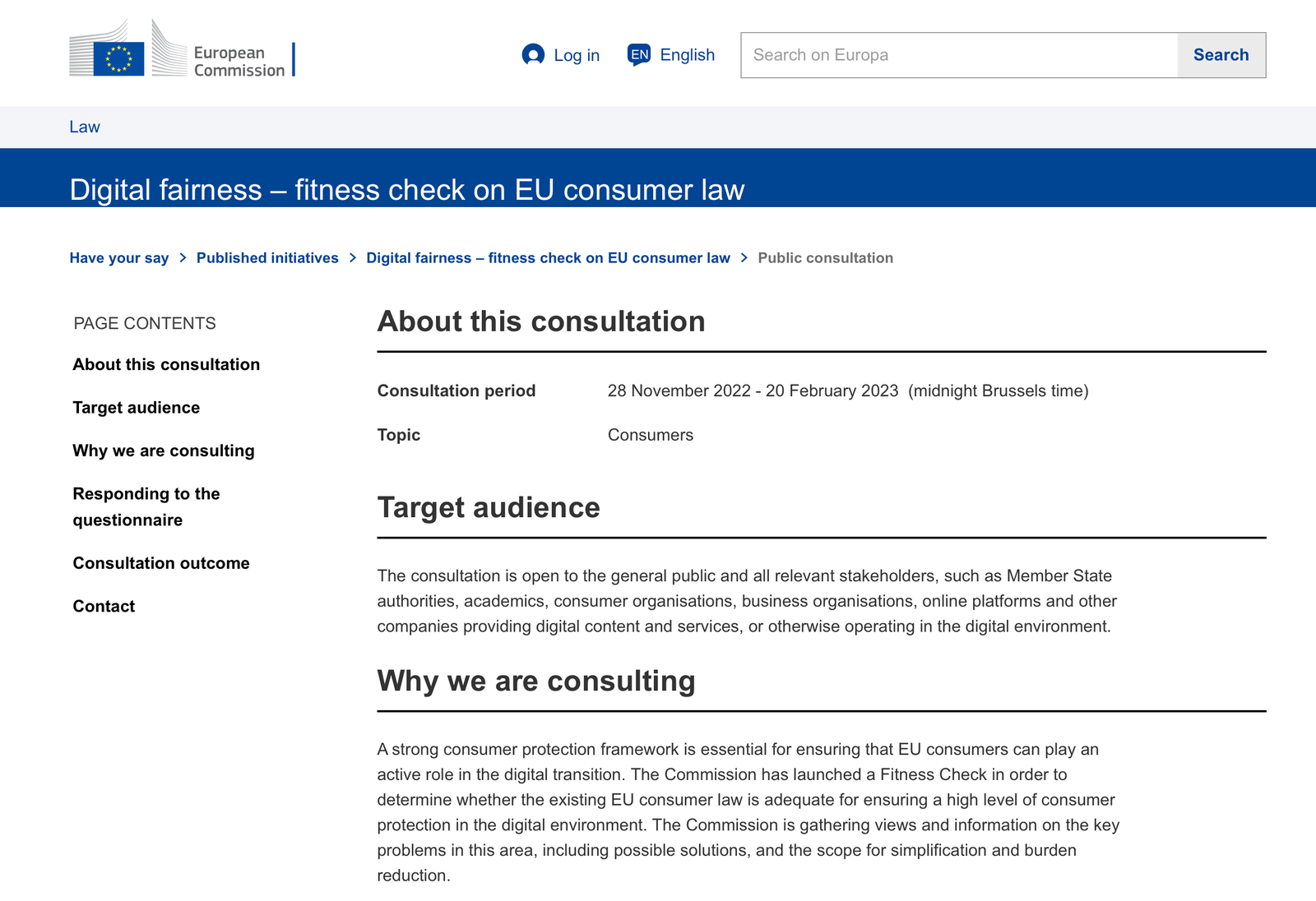
In July 2025, the European Commission opened a public consultation on the upcoming Digital Fairness Act: a piece of legislation designed to address dark patterns, addictive design, manipulative personalisation, and misleading influencer marketing in digital environments. In short, the practices that make the internet feel unfair.
The consultation ran for 12 weeks and gathered over 4,000 submissions from citizens, companies, NGOs, public authorities, and research institutions across Europe. That’s far too much text to read and synthesise manually, so we built the DFA Consultation Dashboard: a tool to explore what respondents actually said, and who said it. Its development was led by Thales Bertaglia, working with Haoyang Gui, Catalina Goanta and Gerasimos Spanakis.
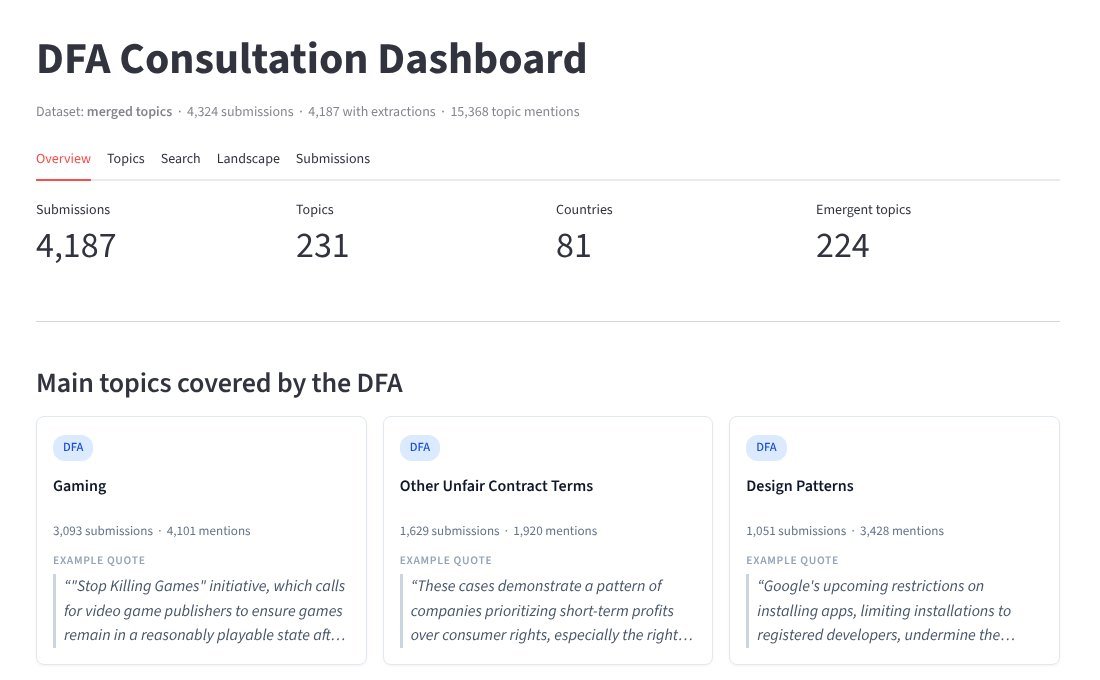
With the dashboard you can:
- browse the main topics covered by the DFA framework and the granular themes identified from the corpus;
- read evidence quotes from submissions directly, grouped by topic;
- filter by stakeholder type, country, and organisation to see who is raising what;
- search across all extracted quotes;
- explore individual submissions in full.
The dashboard is a work in progress. If you work on digital policy or consumer protection, or just want to see what 4,000 stakeholders think the EU should do about the internet, we’d love for you to try it and tell us what you think.
How it works. We use large language models to extract topics and evidence quotes from submission texts. Every quote links back to its source document, and the dashboard shows the model name, parameters, and run metadata, so any extraction can be traced to its origin. Transparency about the pipeline matters as much as transparency about the outputs. We’re also preparing a technical report documenting the full pipeline, the methodological choices, and the steps to reproduce and verify the outputs.
A huge thank you to the students who contributed to data annotation and made this possible: Ella Piispanen, Matteo Migliaccio, Vedika S., Elin Myhrberg, Isolde Torres, Nadia Otten and Amanpreet Nehal.
Participating in policy events
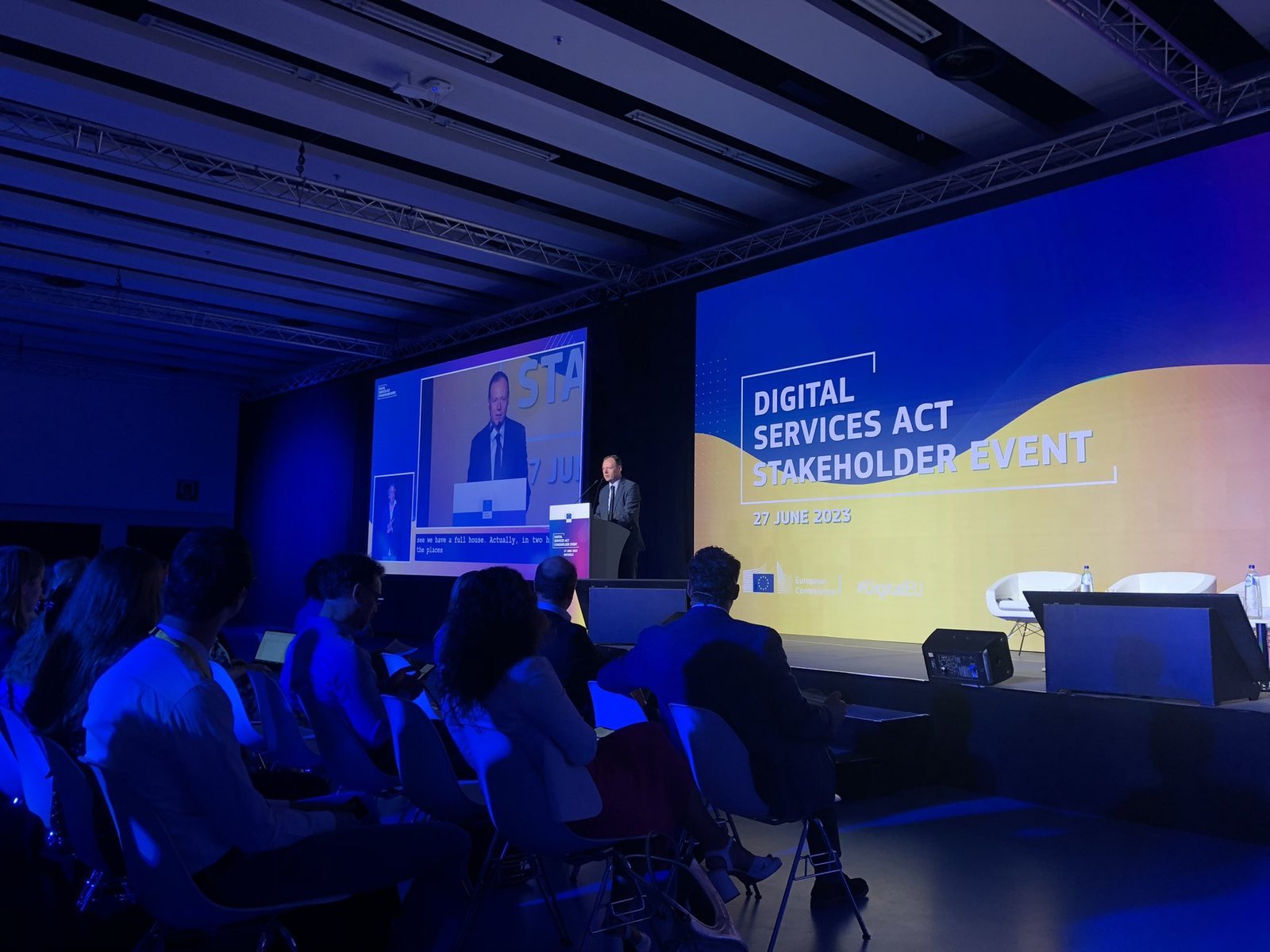
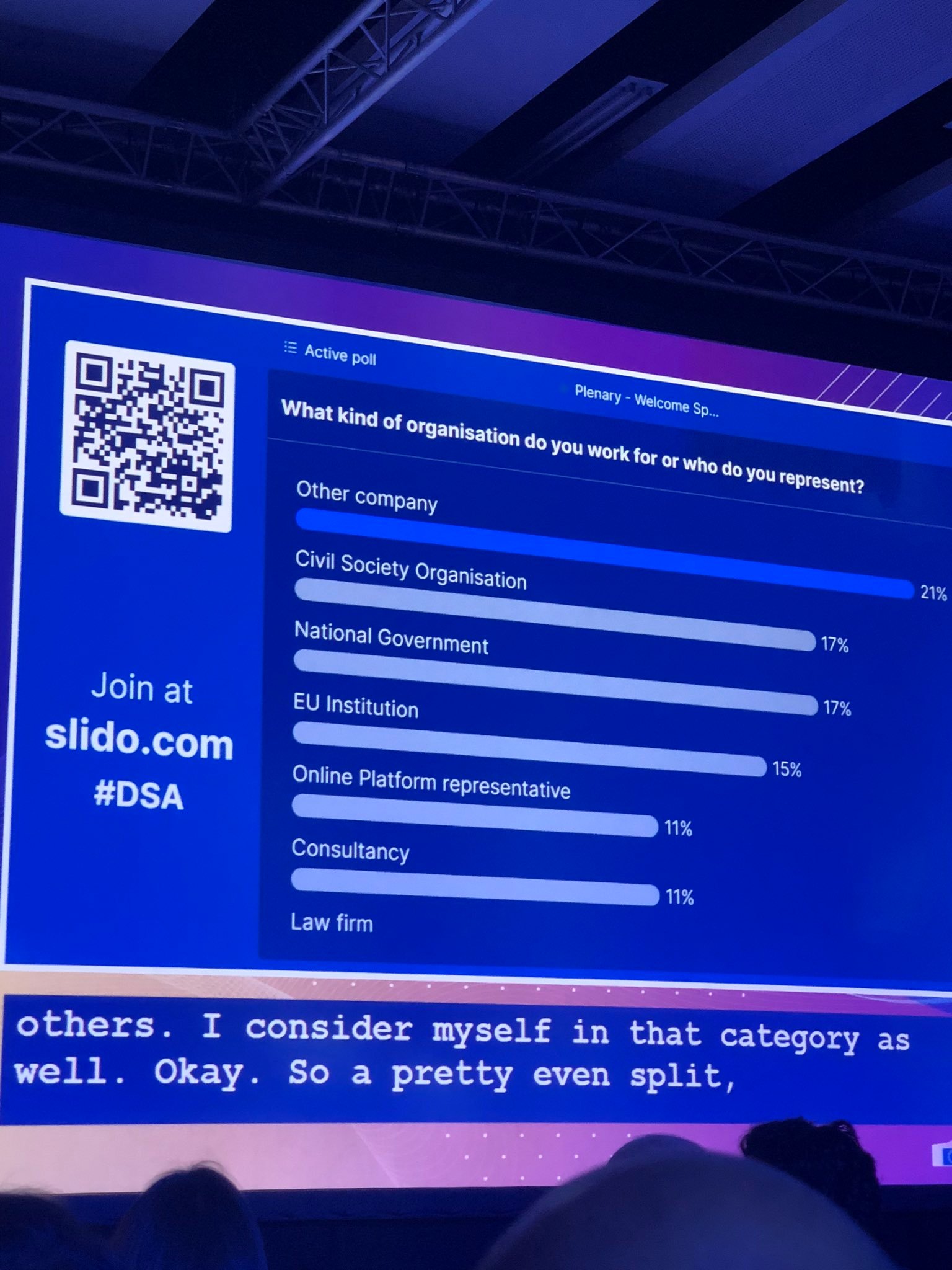
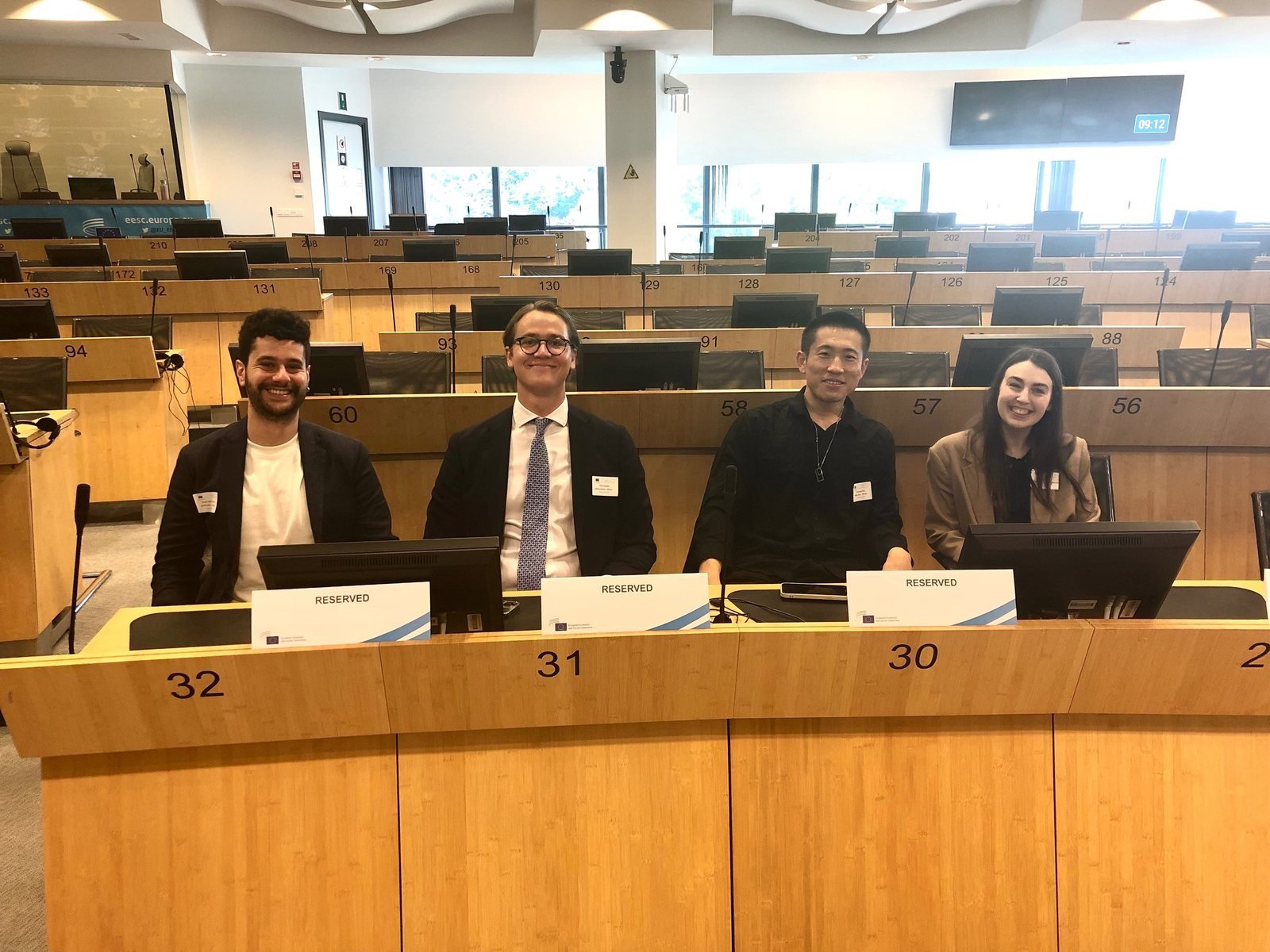
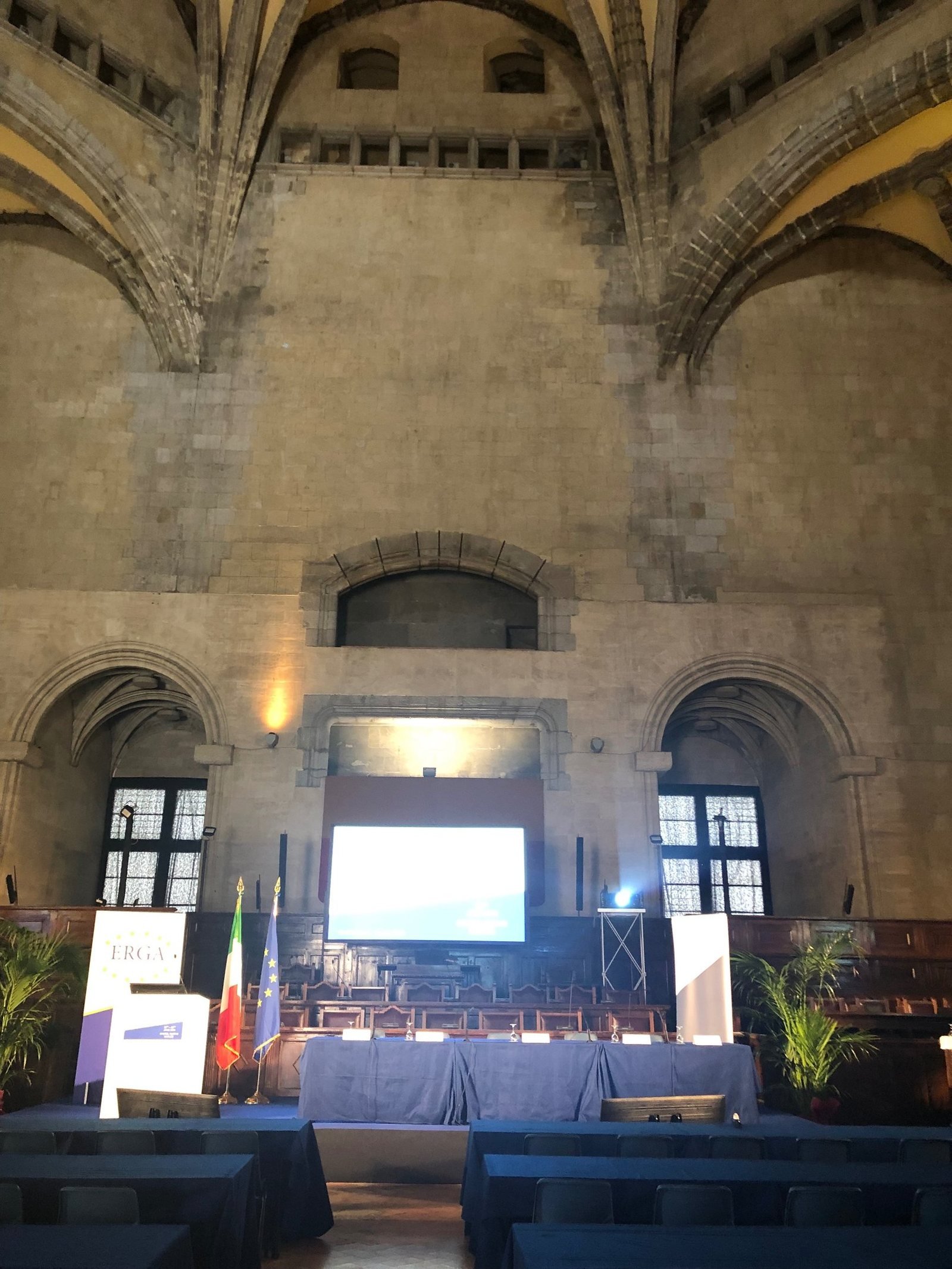
Our team is often invited to participate in events organized by European or national regulators and self-regulators on topics dealing with platform governance, content monetization and influencer marketing. At these events, we provide insights from our research through active participation, keynotes or other presentations. So far, we have attended events organized by the European Commission, the European Economic and Social Committee, the E-Enforcement Academy, the European Regulators Group for Audiovisual Media Services and the European Advertising Standards Alliance. More details about these events, including links, can be found under Community engagement.
Submitting policy briefs to public consultations
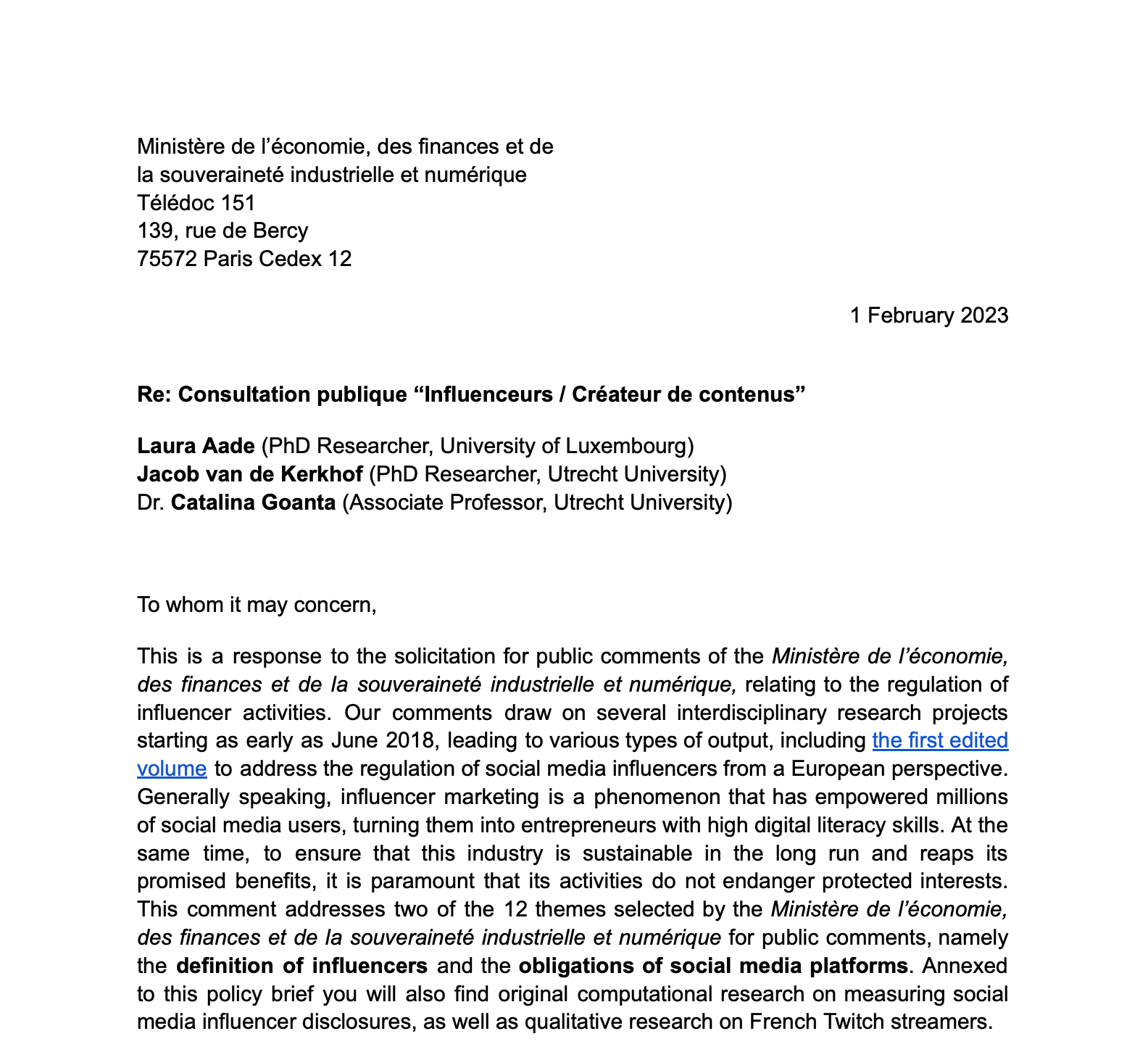
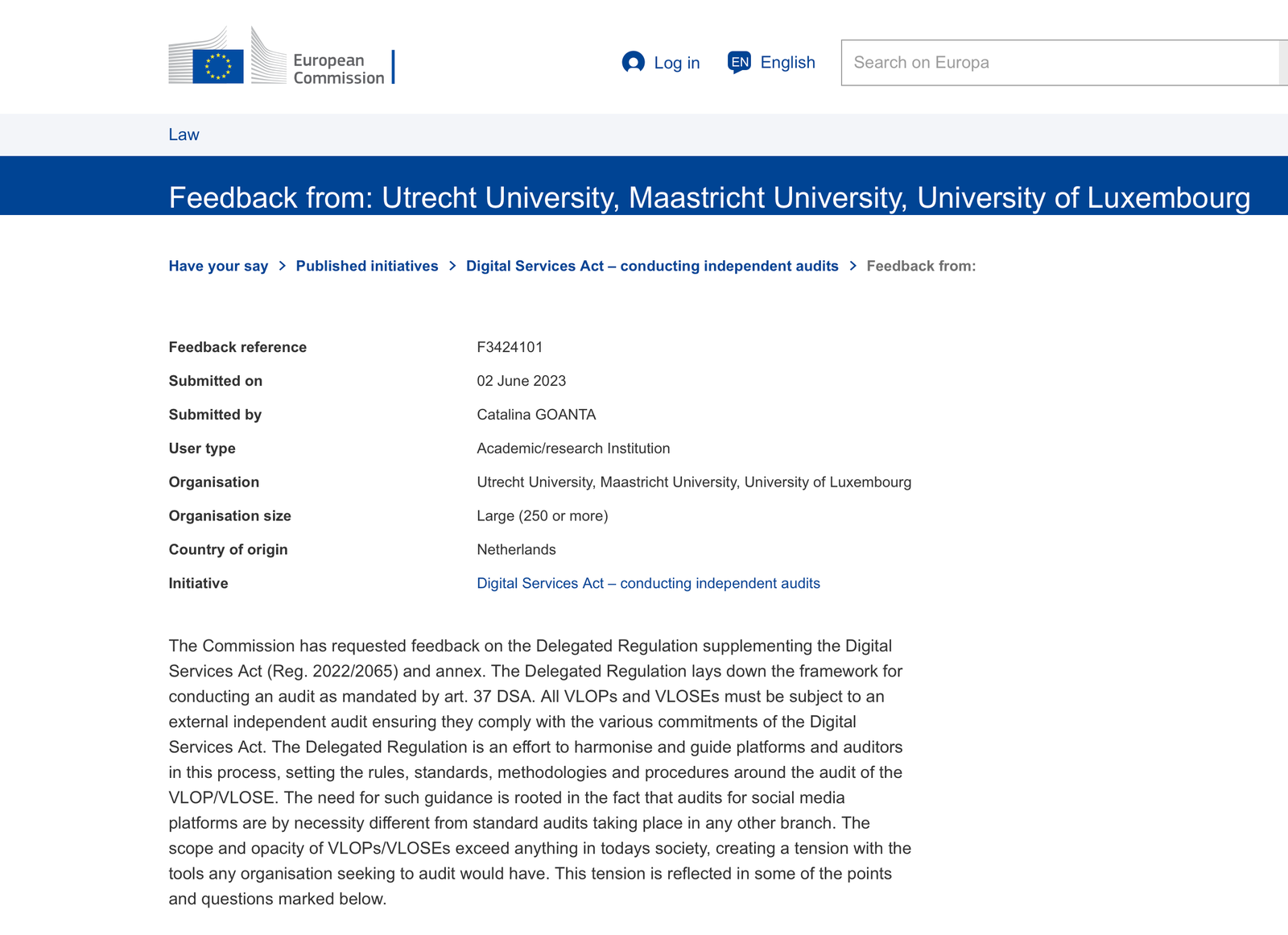
We often participate in public consultations by national and supranational policy-makers to inform this process using insights and perspectives developed on the basis of the evidence gathered in our research. So far, we submitted policy briefs for public consultations held by the French government as well as the European Commission (DG Justice & Consumers; DG CONNECT). In the past, our team members also submitted evidence (both written and oral evidence) to the UK Parliament and the US Federal Trade Commission. All the submitted policy briefs can be found under Publications.